Teach Kids Not to Be Afraid Of Bugs

I know this might be a strange topic, but honestly, bugs are not such a bad thing. They play their roles in our ecosystem and without them, our world could be lost. Take the “save the bees” campaign, bees pollinate, and they help the plants in their cycles of life. Other insects provide food for a range of animals. Some bugs are the clean-up crew and breaking down waste and dead things. There are many useful insects and some that may be pests in our modern world, but they still have a place. Not to mention, they’re a part of life. If you’re ever going to enjoy nature, bugs come with it.

So, why teach your children to not fear them? Well, in a lot of cases, there’s no reason to. Most of them are harmless. When children especially young children fear something, they tend to, well, freak out. Screaming, flailing, running, and overall panicking doesn’t really help the situation. Especially with things like bees. It’s usually best to keep calm. If they have more of an understanding, they’re less likely to be triggered.

Biggest step to stop kids from being afraid of bugs…

This may be a hard one for some, but it starts with you. Parents and guardians have to get their emotions in check. Most of the time when a child has an extreme reaction they were taught by example. You, yourself, need to be able to become less reactive. The best way to overcome fear is with knowledge. Start researching the insects in your area. Become familiar with possibly dangerous ones and what is harmless. For example here in my area, we have 4 venomous spider species. This means, all the rest are pretty harmless. If you can educate yourself on how to identify insects, you’ll be aware of when to worry.
Grow education of bugs into a child’s curiosity
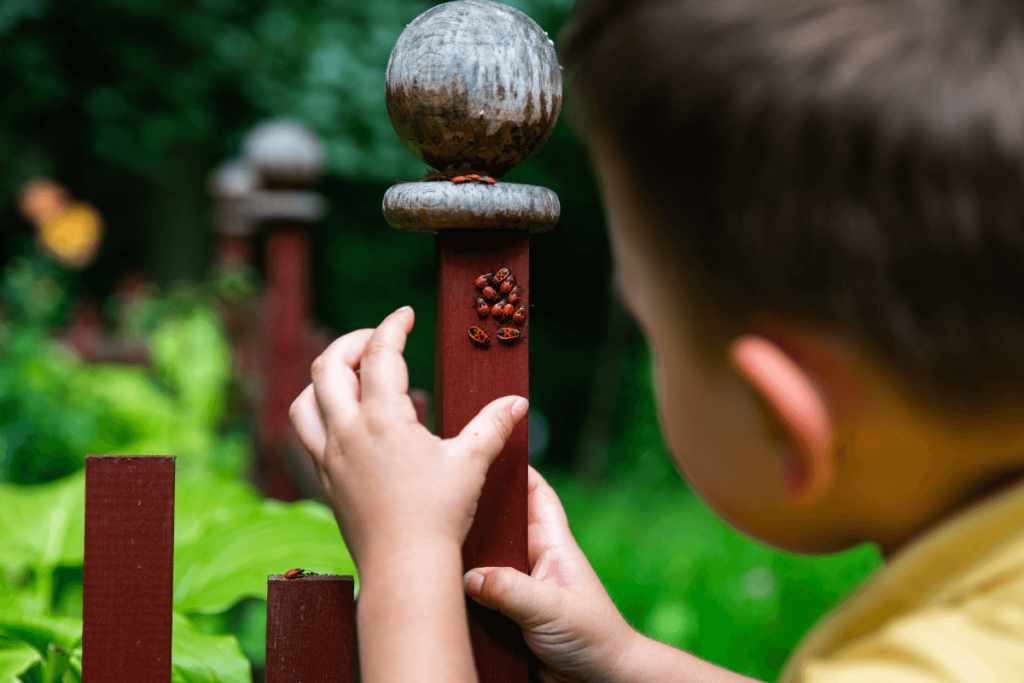
Bugs are fascinating, they really are! The complicated social structure of ants, the complete transformation butterflies have, and the fact fireflies light up! There’s so much to learn. As you and your child grow from fear to curiosity, you can go complete scientist with it! There are so many little kits you can buy that let you safely catch bugs and place them in containers for a more comfortable examination. So much of my daughter’s life from 2 on up was spent catching bugs. We hunted rollie pollies, caught and released moths, dug up worms, and even played with ants. (Every ant was named Butters for a while there) There’s always something new to discover and she’s now grown to watching documentaries at 6 years old on the bee’s family structures. Running in and telling me, with excitement, what she was learning.
Why, why is this important? With learning comes understanding, knowledge equals power. Learning to coexist with our world is important, and teaching the future to do the same, could very well be what saves the planet.
Turn a child’s curiosity for bugs into compassion

My daughter loves moths, thinks bees are cute and is fascinated by praying mantes. She is compassionate to bugs. If she can find understanding and a place for bugs in her life, what kind of love do you think she can have for other people? When we start to think before we react and look for understanding in things we might have normally been afraid of, it can set children up not only to care for the animals in our world but help us understand each other. This is one of the biggest reasons I so strongly encourage animals in children’s lives.
One final note, it’s OK not to love all bugs. If you’re allergic to bees, I get wanting to avoid them. That needs no explanation. You don’t want termites or ants in your house, I get it. Mosquitos are demons and ticks make my skin crawl. But that doesn’t mean we can’t learn and understand more about the world around us with our children through nature, even the creepy crawly parts.